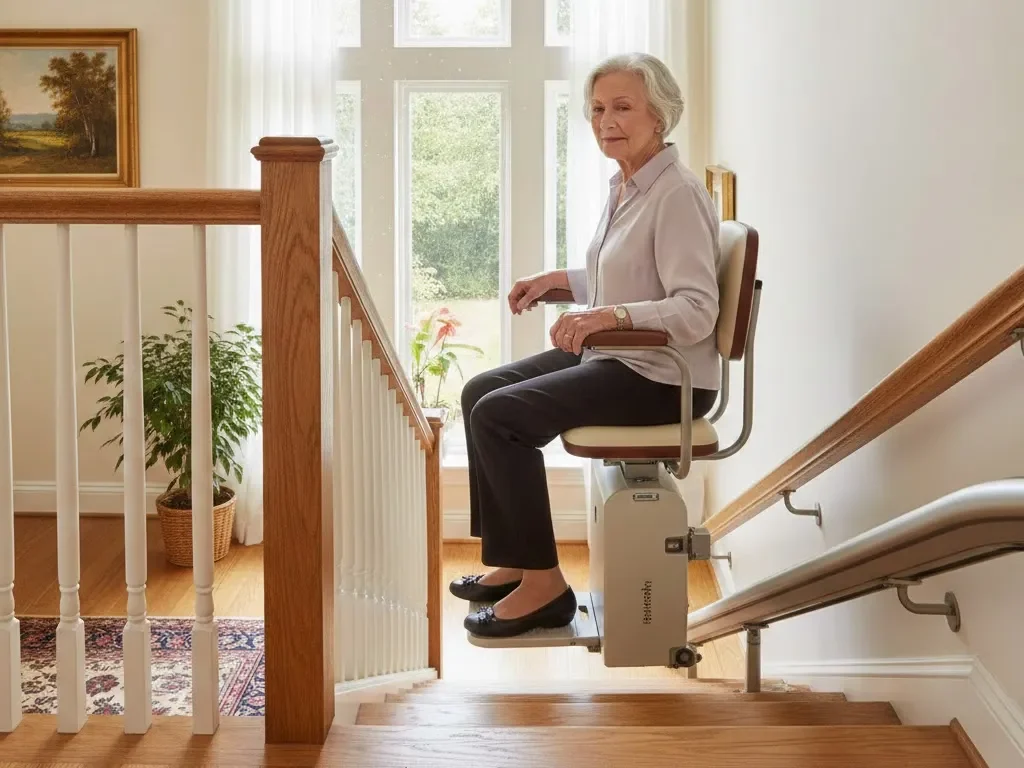
Choosing a stairlift is an important decision because the right model can make everyday movement around the home safer, easier, and more independent. A stairlift should not simply fit the staircase. It should also suit the user’s mobility, balance, strength, body size, ability to transfer on and off the seat, and likely future needs.
Modern stairlifts offer far more choice than basic straight-track models. Buyers can consider straight or curved rails, powered swivel seats, folding footrests, compact designs, battery-backed operation, remote controls, different seat sizes, and reconditioned or rental options. The best approach is to begin with the person who will use the lift and then assess the staircase itself.
Start With the User’s Mobility Needs
Before comparing brands or prices, consider how the stairlift will actually be used. Someone who can walk reasonably well but struggles with stairs may need a different setup from someone with limited hip or knee movement, poor balance, reduced grip strength, or difficulty standing from a seated position.
A professional home assessment can identify issues that are easy to overlook. The assessor should consider how safely the user can get on and off at both floors, whether a swivel seat would help, whether the controls are easy to operate, and whether the seat, armrests, footrest, and safety belt are suitable.
It is also sensible to think ahead. If mobility may decline, choosing practical powered features or a more supportive seat now could reduce the need for later changes.
Match the Stairlift to the Staircase
The shape and dimensions of the staircase are major factors in choosing the right stairlift.
A straight stairlift is designed for stairs that run in one straight line without bends or changes in direction. Curved stairlifts are intended for stairs with turns, bends, landings, or more complex layouts. Their rails normally need to be configured around the individual staircase, making an accurate survey especially important.
Narrow staircases require extra attention. A compact carriage, folding seat, folding footrest, and folding arms can help preserve usable space for other people. The installer should also check headroom, knee clearance, doorways, radiators, bannisters, and the available space at the top and bottom.
Renting or Buying a Stairlift
Buying is usually the most straightforward choice when a stairlift is expected to be needed long term. It provides a wider choice of models and optional features and may offer better value over time.
Renting can make more sense when the need is temporary, such as during recovery from an operation or injury, or when a family is uncertain how long the equipment will be required. Rental packages vary, so compare installation charges, minimum rental periods, monthly costs, servicing, breakdown cover, and removal fees.
Before signing an agreement, ask what happens if the user’s needs change or the stairlift is no longer required. Comparing the total cost is more useful than focusing only on an advertised monthly price.
Beyond choosing betweenrenting or buying, there are other ways to manage the overall cost of this equipment. For instance, some buyers do not realize that stairlifts can be tax deductible under specific conditions. If a doctor prescribes the lift for a medical reason, you may be able to claim it as a medical expense on your federal tax return. This option usually requires you to itemize your deductions and meet certain income thresholds. It is a helpful financial option that can make home modifications much more affordable for seniors.
For readers in the United States, eligibility depends on individual circumstances and applicable IRS rules, so current official guidance or professional tax advice should be checked before relying on a deduction. In the UK, eligible people may also be able to explore local-authority support for home adaptations, including stairlifts.
New or Reconditioned?
A new stairlift can be ideal when you want maximum flexibility over configuration, upholstery, powered features, warranties, and long-term support. However, a professionally reconditioned stairlift can also be a practical and cost-effective option.
Many stairlift suppliers Milton Keynes offer both new and refurbished options, making it easier to compare solutions according to the staircase, required features, and available budget.
When considering a reconditioned model, ask which components have been inspected or replaced, whether the batteries have been tested, what warranty is included, and who will provide servicing and emergency call-outs.
For curved staircases, pay particular attention to the rail. Because curved rails are designed around the staircase, a reputable installer should ensure the rail is suitable and correctly configured for the new installation.
Focus on the Features That Matter
A long feature list does not automatically make a stairlift better. The best features are the ones that solve real problems for the user. Useful options may include:
- A swivel or powered swivel seat to make getting on and off easier.
- Folding arms, seat, and footrest where staircase space is limited.
- A safety belt and obstruction sensors.
- Easy-to-use controls suited to the user’s dexterity.
- Remote call-and-send controls.
- Battery-backed operation for limited use during a power interruption.
Where possible, arrange a demonstration before purchasing. Trying the stairlift can reveal issues that are difficult to judge from a brochure, such as seat comfort, knee position, armrest support, control sensitivity, and the effort required to swivel or fold components.
Check Safety, Compliance, and Installation Quality
A stairlift is mobility equipment, so installation quality matters as much as the product itself. New stairlifts should meet applicable safety requirements and be supplied with appropriate instructions and safety documentation.
Choose a supplier that carries out a proper survey before installation and clearly explains how the stairlift will be fitted. Once installation is complete, the user and, where appropriate, a family member or carer should receive a full demonstration.
Make sure everyone understands how to start and stop the lift, use the safety belt, swivel the seat, fold components, use remote controls, charge the batteries correctly, and respond if the lift stops unexpectedly.
Compare Warranty, Servicing, and Breakdown Support
The cheapest quote is not always the least expensive option over the life of the stairlift. Ask what the warranty covers, whether parts and labour are included, how batteries are treated, and what happens after the initial warranty ends.
After-sales support is particularly important for someone who depends on the stairlift every day. Check the supplier’s call-out arrangements, service availability, and repair support.
Regular maintenance should follow the manufacturer’s recommendations. Servicing can identify worn components, battery deterioration, charging problems, or safety issues before they become disruptive.
Consider the Full Cost
When comparing quotations, make sure they cover the same things. One price may include surveying, delivery, installation, warranty, and servicing, while another may charge separately.
Ask for a written quotation explaining the model, rail type, optional features, installation work, warranty, service plan, and ongoing costs. Avoid choosing solely because of a headline discount or high-pressure sales offer.
If cost is a concern, compare new, reconditioned, and rental options. UK residents with eligible needs can also investigate whether local-authority assistance for home adaptations may be available.
Choose a Reputable Stairlift Supplier
The supplier may be responsible for surveying, installation, servicing, repairs, and eventual removal, so reputation and after-sales capability matter.
Look for a company that explains the advantages and limitations of different options rather than automatically recommending the most expensive model. A good supplier should provide a clear written quotation, explain warranty and service terms, and demonstrate the equipment after installation.
For curved, narrow, or unusual staircases, ask about the company’s experience with similar installations.
Final Thoughts
The best stairlift is not necessarily the newest model or the one with the most features. It is the stairlift that fits the staircase correctly, supports the user’s mobility needs, is comfortable and simple to operate, and comes with dependable installation and after-sales support.
Begin with an assessment of the user, then consider the staircase, safety features, new versus reconditioned equipment, rental versus purchase, warranty, maintenance, and total cost. Where possible, test the equipment and obtain a detailed written quotation before committing.
Taking more care at the selection stage can make a meaningful difference to safety, confidence, comfort, and independence at home.
Approximate Article Word Count: 1,350 words