Transforming a cold or sterile house into a welcoming home relies heavily on how you illuminate the space. Overhead lighting often casts harsh shadows and flattens room dimensions, making it difficult to relax after a long day. Shifting your focus toward layered illumination introduces depth, comfort, and a distinct mood that instantly changes how a room feels. Mastering domestic illumination requires careful planning, an understanding of color temperature, and thoughtful placement of fixtures to build spaces that feel genuinely inviting.
Understanding Color Temperature for Cozy Spaces
The foundation of a warm interior begins with the color temperature of your light bulbs, measured in Kelvin. Higher Kelvin numbers produce cool, bluish light that mimics harsh daylight, which suits offices or garages but ruins relaxation spaces. To foster a cozy environment, select bulbs that fall between 2200K and 2700K. This range emits a soft, golden glow similar to traditional incandescent bulbs and flickering candlelight.
-
2200K to 2400K: Delivers an ultra-warm, amber hue ideal for bedrooms, intimate dining areas, and decorative accent fixtures.
-
2700K: Offers a warm white light that works well in kitchens and living rooms without straining the eyes or altering skin tones unnaturally.
-
Frosted Glass Bulbs: Diffuse the light output evenly, preventing the harsh glare that clear glass bulbs often produce.
Avoiding daylight bulbs in living areas is crucial if your goal is warmth. Even if a room receives abundant natural sunlight during the afternoon, replacing your evening bulbs with warm alternatives ensures a smooth transition into night, signaling your body to unwind.
The Power of Layered Illumination
Relying on a single ceiling fixture creates a flat and uninspired environment. Professional designers always rely on the three-layer approach to build visual interest and flexibility:
Ambient Illumination
Ambient illumination provides the overall background glow for a room. Instead of turning on blinding ceiling fan lights, use dimmable flush mounts, chandeliers, or wall sconces equipped with dimmer switches. Dimmers are essential tools because they allow you to adjust the brightness level depending on the time of day and the desired atmosphere.
Task Illumination
Task illumination focuses light on specific functional areas where you perform activities such as reading, cooking, or working. Desk lamps in home offices, under-cabinet LED strips in kitchens, and reading lights beside armchairs fall into this category. Choosing adjustable lamps lets you direct the illumination precisely where it is needed while maintaining a cozy shadow play in the rest of the room.
Accent Illumination
Accent illumination highlights architectural features, artwork, or prized collectibles. Picture lights, uplights placed behind large indoor plants, and LED tape hidden inside bookshelf recesses draw the eye to specific focal points. This technique breaks up monotony and adds architectural depth to plain walls.
Strategic Placement and Fixture Selection
Where you position your light sources matters just as much as the fixtures themselves. Placing every light source at eye level creates visual clutter and a blinding environment. Instead, distribute illumination at varying heights throughout the room.
Floor lamps placed in dark corners bounce light off walls and open up tight spaces. Table lamps with ceramic or textured fabric shades filter light downward and outward, creating pools of warmth on side tables and consoles. Sconces mounted at varying heights along hallways or flanking a fireplace create a rhythmic pattern that draws people through the home naturally.
Incorporating Secondary Light Sources
Beyond traditional lamps and hardwired fixtures, secondary light sources introduce organic charm and flexibility.
-
Candles and Lanterns: Real wax candles or high-quality battery-operated pillar candles flickering inside glass lanterns introduce natural movement and soft shadows that electric bulbs cannot replicate.
-
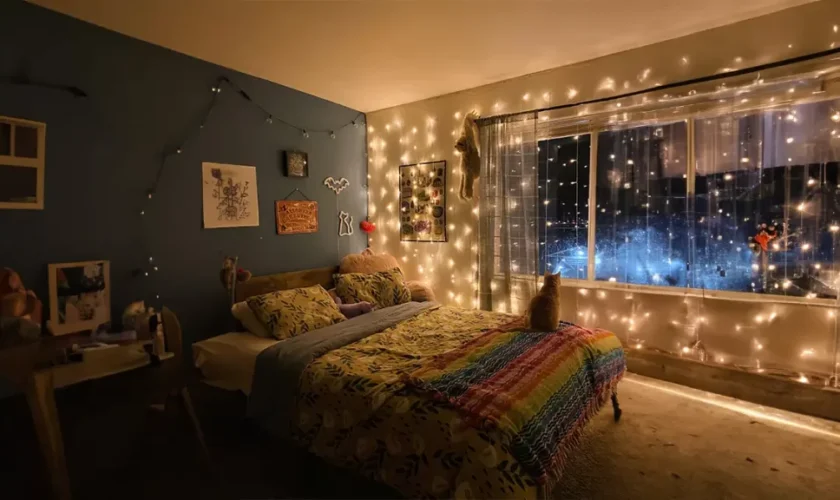
Fairy and String Lights: Draping delicate warm-white string lights along a headboard, behind sheer curtains, or inside large glass vases adds a whimsical touch without looking juvenile.
-
Fireplaces: Utilizing a wood-burning, gas, or electric fireplace anchors a room, providing both physical warmth and a mesmerizing visual focal point.
Grouping these alternative sources together creates cozy vignettes that make large rooms feel intimate and approachable.
Choosing the Right Lampshades
Lampshades do more than just cover hardware; they dictate how light interacts with your living space. Selecting the wrong material can trap too much light or let through an uncomfortable glare.
Fabric shades made from linen, burlap, or heavy cotton diffuse illumination softly, casting a gentle glow across the room. Darker exterior shades lined with gold or copper foil inside bounce warm, reflective tones outward, amplifying the cozy effect. Glass shades should feature frosted, seeded, or smoked finishes to soften the intensity of the bulb filament. Avoid stark white plastic shades, as they tend to look clinical and project cold light.
Frequently Asked Questions
What color temperature is best for creating a cozy living room?
Bulbs rated between 2400K and 2700K provide the ideal warm, golden hue necessary for a relaxing living room environment.
How can I make a dark room feel brighter without using harsh lights?
Incorporate multiple low-wattage floor and table lamps distributed around the perimeter of the room, and place mirrors opposite windows to reflect and amplify natural daylight.
Are smart bulbs effective for setting a warm home ambiance?
Smart bulbs offer exceptional versatility because they allow you to program custom color temperatures, schedule automated dimming routines, and adjust brightness levels from your phone.
How do I prevent my home from looking flat and unlit?
Adopt a multi-layered approach by combining ambient overhead fixtures, localized task lamps, and accent lights that highlight specific textures or artwork at different heights.
What type of lampshades diffuse light the best?
Woven natural fibers, heavy linen fabrics, and frosted or amber-tinted glass shades yield the softest and most evenly distributed illumination.
How can I use lighting to make a large room feel more intimate?
Position low-level accent lamps in corners, use warm-toned floor lamps to create pools of light, and dim your primary overhead fixtures to shrink the perceived scale of the space.